• Skip to Navigation
  • Skip to Content
  • Skip to Footer

Center for Media at Risk

  • NEWS
  • EVENTS
  • Media
    • Infographics
    • Podcasts
    • Youtube Page
  • Takeaways
    • Reflections
    • Research
    • Reviews
    • Talks to text
  • Divider
  • ABOUT
    • Misson
    • Meet our Director
    • Engage with Us
  • People
    • FACULTY & STAFF
    • Steering Committee
    • AFFILIATES
    • Alumni
    • New Window
    • New Window

Takeaways

  • Takeaways
    • Talks to text
    • Reflections
    • Research
    • Reviews
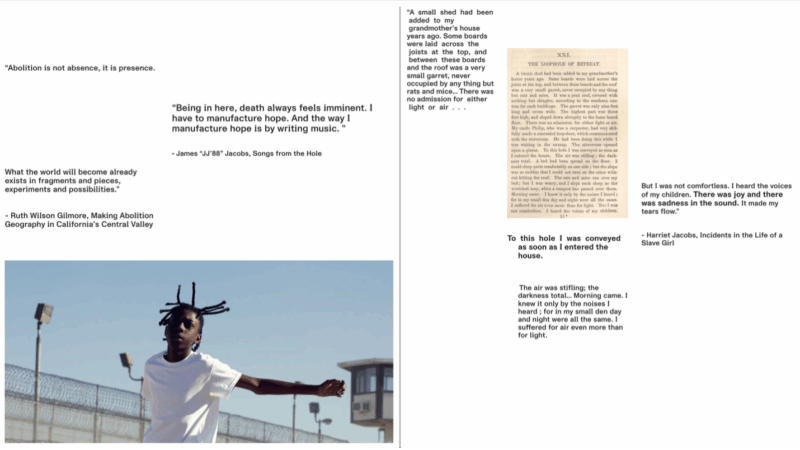
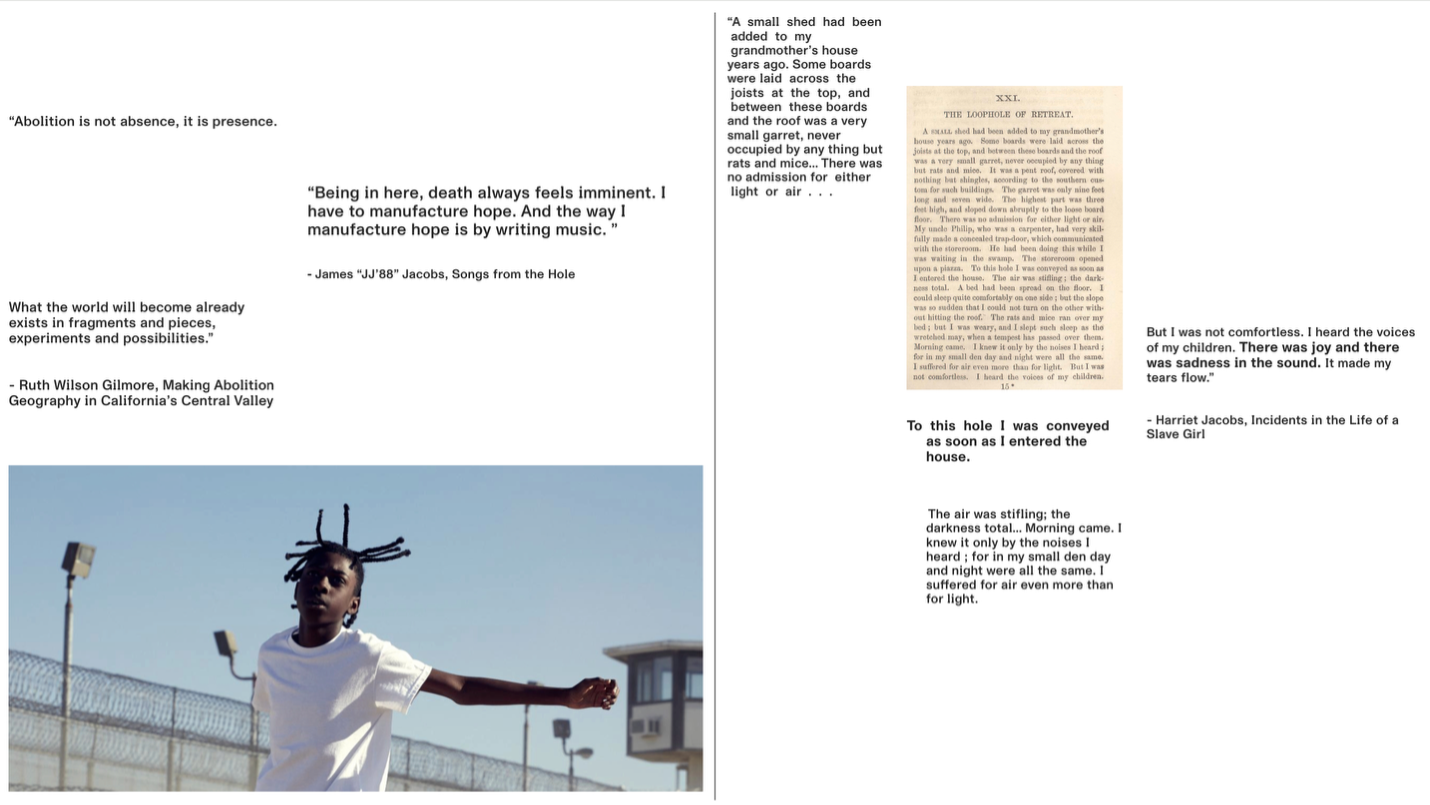
A two-page layout combines quotations about abolition, incarceration, and survival with historical text and a contemporary photograph. Left side: At the top left, the sentence “Abolition is not absence, it is presence.” appears in plain black text. Below it, another quote reads: “Being in here, death always feels imminent. I have to manufacture hope. And the way I manufacture hope is by writing music.” attributed to James “JJ88” Jacobs, Songs from the Hole. Further down is a quote from Ruth Wilson Gilmore: “What the world will become already exists in fragments and pieces, experiments and possibilities.” At the bottom left is a large photograph of a young person outdoors in a prison yard. They wear a white T-shirt and have short twisted braids that extend upward. Their arms are outstretched as they move, with a chain-link fence topped with razor wire and prison watchtowers visible in the background. Right side: At the top is a passage printed in an old book layout with the heading “XXI. The Loophole of Retreat.” Next to it is a quote from Harriet Jacobs’s Incidents in the Life of a Slave Girl: “But I was not comfortless. I heard the voices of my children. There was joy and there was sadness in the sound. It made my tears flow.” Below, additional text from Jacobs describes being confined in a tiny, airless garret and hearing the noises of her children while suffering through total darkness. The stacked quotations emphasize enclosure, survival, and the emotional experience of confinement.
Hemmed in, but not quite: An interview with Songs from the Hole Documentary Team
reviews

Hemmed in, but not quite: An interview with Songs from the Hole Documentary Team

  • December 9, 2025
View Hemmed in, but not quite: An interview with Songs from the Hole Documentary Team
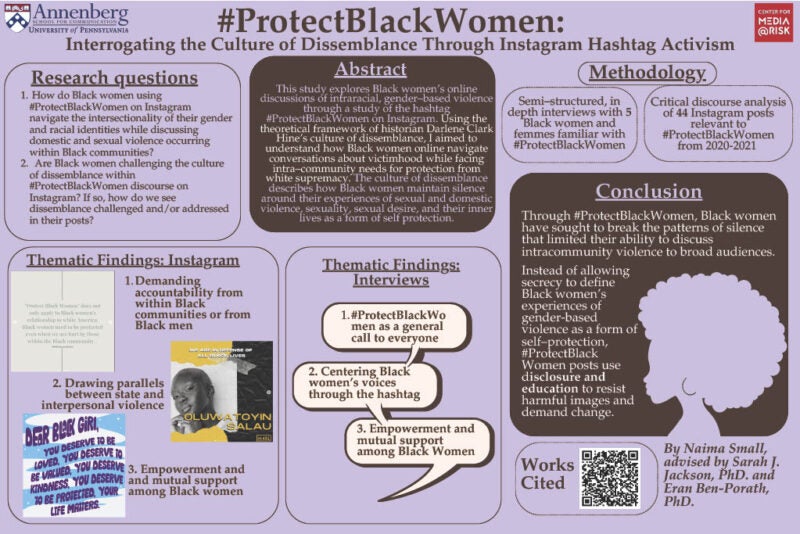
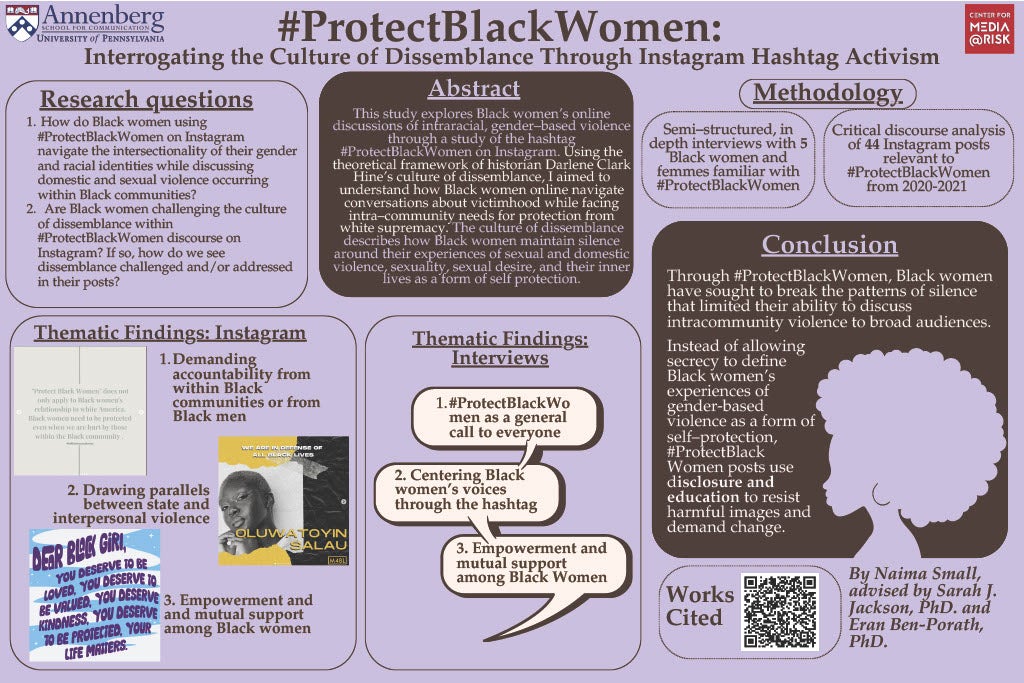
Poster Text Research Questions ● How do Black women using #ProtectBlackWomen on Instagram navigate the intersectionality of their gender and racial identities while discussing domestic and sexual violence occurring within Black communities? ● Are Black women challenging the culture of dissemblance within #ProtectBlackWomen discourse on Instagram? If so, how do we see dissemblance challenged and/or addressed in their posts? Abstract This study explores Black women’s online discussions of intraracial, gender–based violence through a study of the hashtag #ProtectBlackWomen on Instagram. Using the theoretical framework of historian Darlene Clark Hine’s culture of dissemblance, I aimed to understand how Black women online navigate conversations about victimhood while facing intra–community needs for protection from white supremacy. The culture of dissemblance describes how Black women maintain silence around their experiences of sexual and domestic violence, sexuality, sexual desire, and their inner lives as a form of self protection. Methodology ● Semi–structured, in depth interviews with 5 Black women and femmes familiar with #ProtectBlackWomen ● Critical discourse analysis of 44 Instagram posts relevant to #ProtectBlackWomen from 2020-2021 Thematic findings: Instagram 1. Demanding accountability from Black men/Black communities 2. Drawing parallels between state and interpersonal violence 3. Empowerment and mutual support among Black women Thematic findings: Interviews 1. #ProtectBlackWomen as a call to everyone 2. Centering Black women’s voices through the hashtag 3. Empowerment and mutual support among Black women Conclusion Through #ProtectBlackWomen, Black women have sought to break the patterns of silence that limited their ability to discuss intracommunity violence to broad audiences. Instead of allowing secrecy to define Black women’s experiences of gender-based violence as a form of self–protection, #ProtectBlackWomen posts use disclosure and education to resist harmful images and demand change.
Protect Black Women
research

Protect Black Women

  • June 30, 2025
View Protect Black Women
Close-up of male trader typing on computer keyboard while trading on stock market in night office
Margot Susca on Newspaper Ownership, the Private Investment Era and the Future of Local Journalism
reflections

Margot Susca on Newspaper Ownership, the Private Investment Era and the Future of Local Journalism

  • April 1, 2025
View Margot Susca on Newspaper Ownership, the Private Investment Era and the Future of Local Journalism
A smartphone displaying the Oscars logo against a blurred awards ceremony background. January 13, 2025
From Criminal to Saint
reviews

From Criminal to Saint

  • February 21, 2025
View From Criminal to Saint
Tik Tok application icon on iPhone 11 pro max screen in hand and have a bokeh for background. Tiktok social media network.May 7, 2021, Bangkok, Thailand
Goodbye, TikTok (?): Data Nihilism and Takeover Conspiracies
reflections

Goodbye, TikTok (?): Data Nihilism and Takeover Conspiracies

  • February 18, 2025
View Goodbye, TikTok (?): Data Nihilism and Takeover Conspiracies
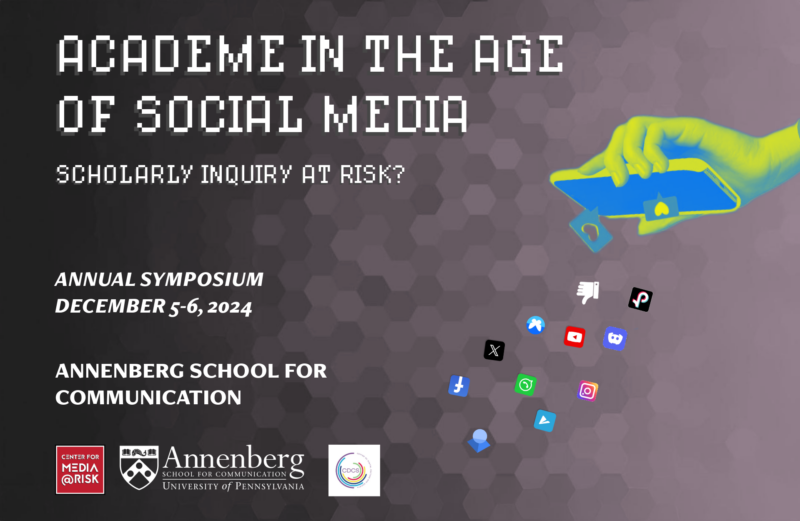
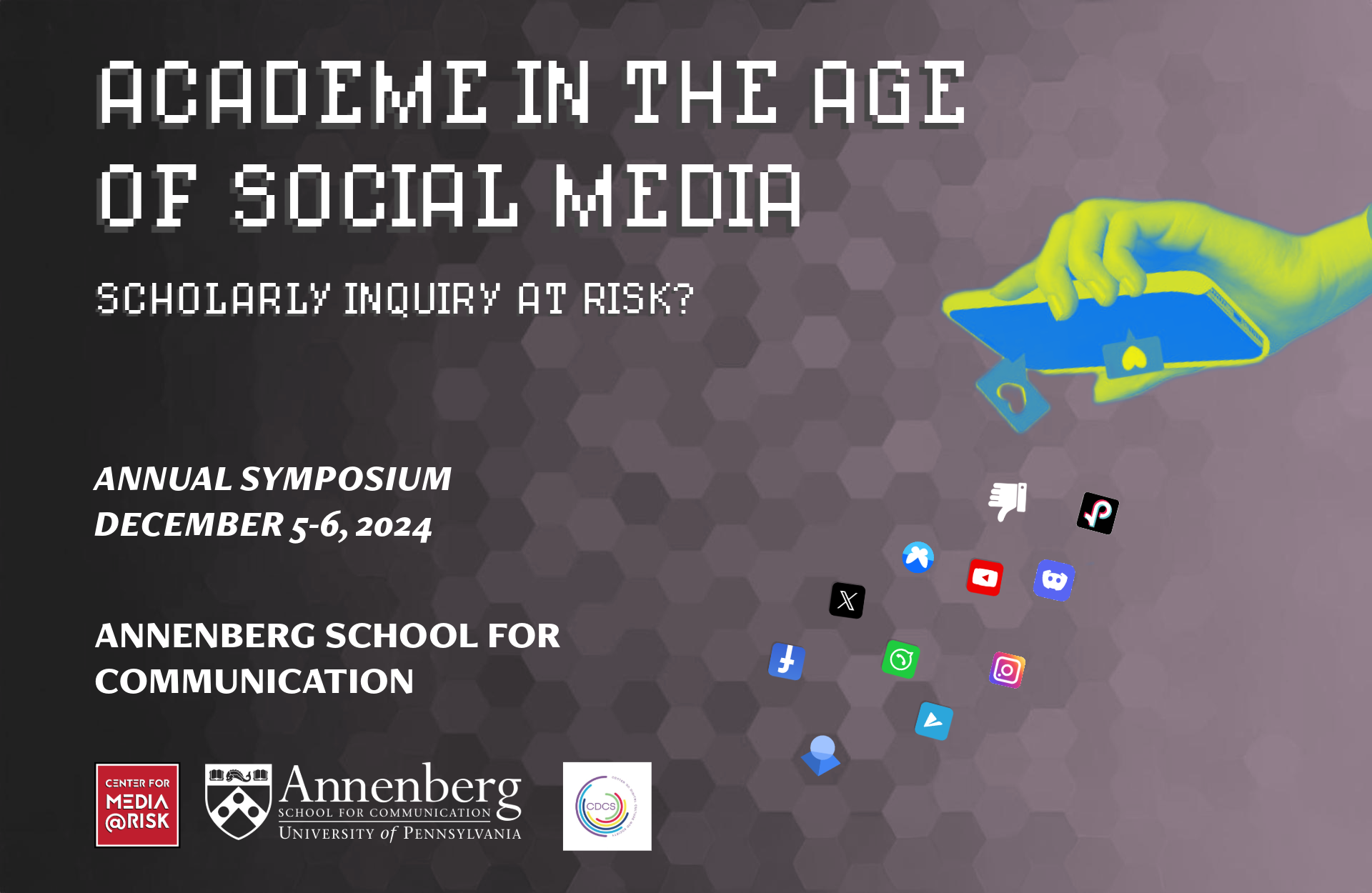
The image is a promotional poster for an event titled "Academe in the Age of Social Media: Scholarly Inquiry at Risk?" The background is a gradient of dark grey hexagons. At the top, the title "ACADEME IN THE AGE OF SOCIAL MEDIA" is written in large white text, followed by "SCHOLARLY INQUIRY AT RISK?" in smaller white text. Below this, on the left side, it states "ANNUAL SYMPOSIUM DECEMBER 5-6, 2024" and "ANNENBERG SCHOOL FOR COMMUNICATION." The Annenberg School for Communication logo and University of Pennsylvania logo are displayed at the bottom left corner. On the right side of the image, there is a stylized illustration of a hand holding a smartphone with various social media icons (such as Facebook, Twitter, Instagram) floating out from it.
Academe in the Age of Social Media: Scholarly Inquiry at Risk?
talks to text

Academe in the Age of Social Media: Scholarly Inquiry at Risk?

  • February 11, 2025
View Academe in the Age of Social Media: Scholarly Inquiry at Risk?
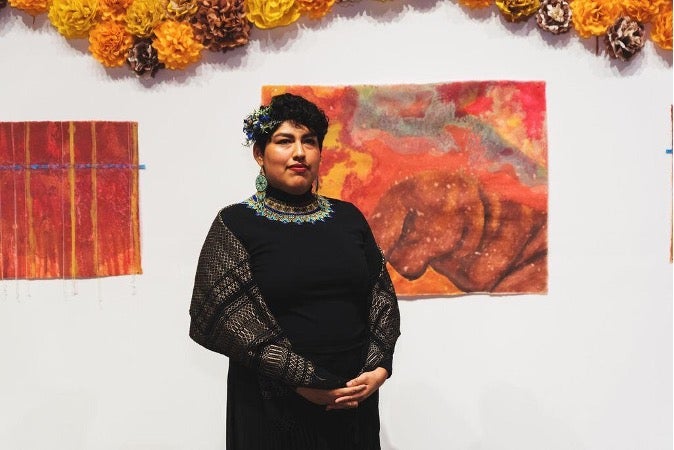
The image shows a person standing in front of a wall decorated with colorful paper flowers and two pieces of artwork. The person is wearing a black outfit with intricate patterns and a beaded necklace.
Art in the Margins: Navigating Precarity, Risk and Resistance in Philadelphia’s Art Scene
research

Art in the Margins: Navigating Precarity, Risk and Resistance in Philadelphia’s Art Scene

  • December 16, 2024
View Art in the Margins: Navigating Precarity, Risk and Resistance in Philadelphia’s Art Scene
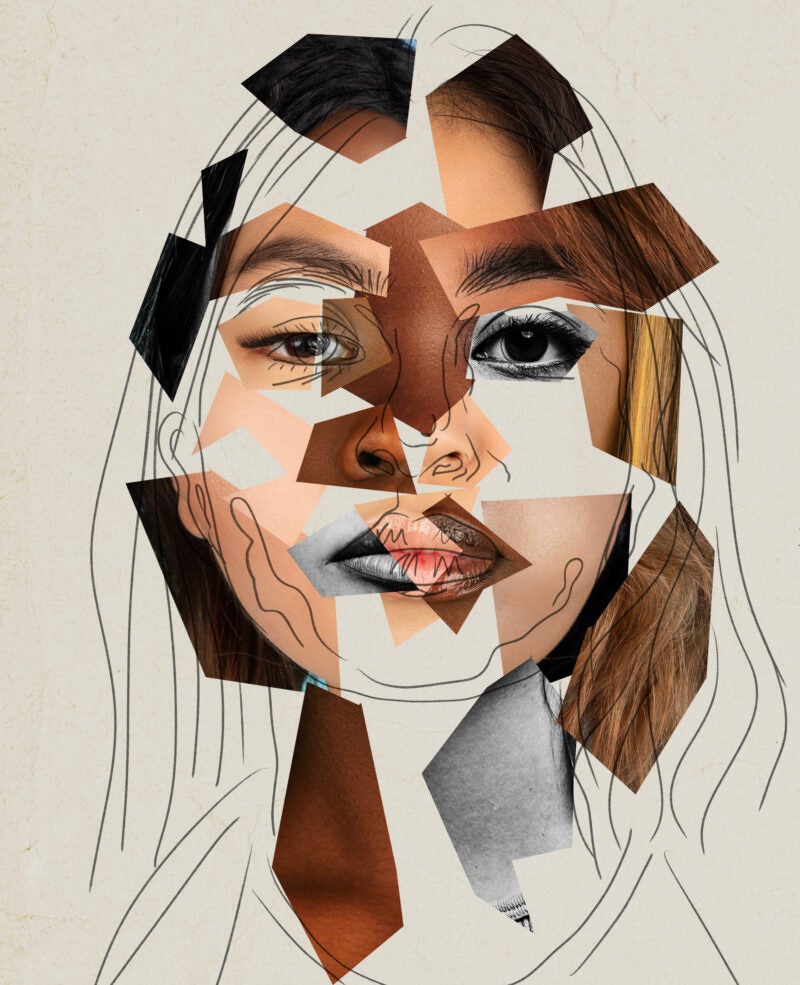
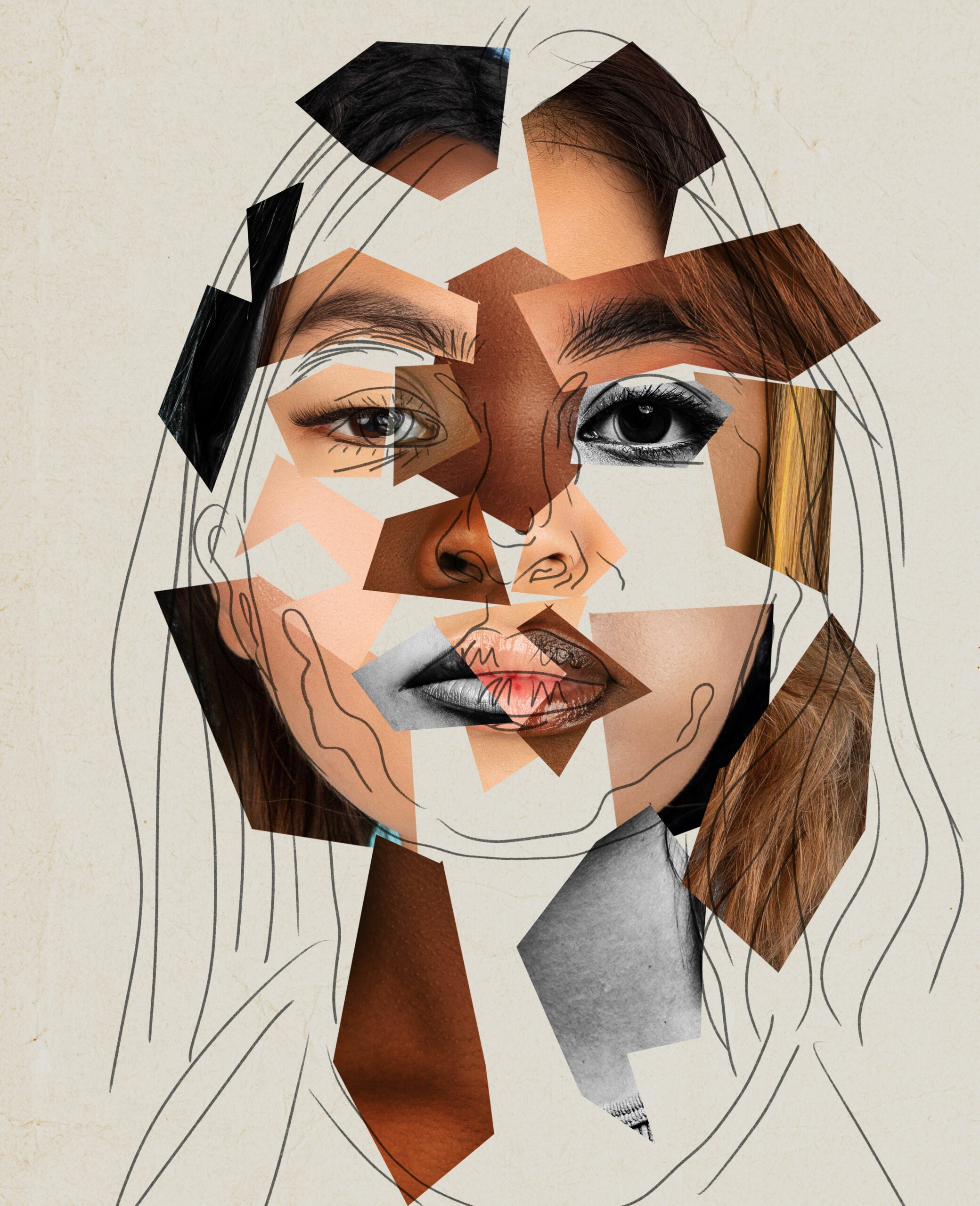
Contemporary art collage. Modern design. Female face made from different face parts of women with different skin and hair colors.
Transnational Feminists Model Media Resistance
reflections

Transnational Feminists Model Media Resistance

  • December 10, 2024
View Transnational Feminists Model Media Resistance
A promotional poster for an event titled "Moya Bailey on Kamala Harris, Misogynoir, and the Future of the Left." The poster includes the logos of the Annenberg School for Communication at the University of Pennsylvania and the Center for Media at Risk.
Moya Bailey on Kamala Harris, Misogynoir and the Future of the Left
reflections

Moya Bailey on Kamala Harris, Misogynoir and the Future of the Left

  • October 31, 2024
View Moya Bailey on Kamala Harris, Misogynoir and the Future of the Left
The image shows a signpost with three green directional arrows pointing to the right. The arrows are labeled "RURAL," "JOURNALISM," and "AT RISK." The background features a cloudy sky and tall grass at the bottom. In the top right corner, there is a red box with white text that reads "CENTER FOR MEDIA @ RISK."
Rural Journalism at Risk
research

Rural Journalism at Risk

  • August 1, 2024
View Rural Journalism at Risk
1 2 3 … 8 Next

Center for Media at Risk

Annenberg School for Communication
3620 Walnut Street
Philadelphia, PA 19104

Email: media.risk@asc.upenn.edu

    • New Window
    • New Window

The Center for Media at Risk is dedicated to identifying threats to media and strategizing in response to conditions that undermine free and critical media practice worldwide.

Center for Media at Risk
Copyright © 2025 Center for Media at Risk. All rights reserved.
WordPress Theme by FORQY
  • Privacy Policy
  • Report Accessibility Issues and Get Help
    • New Window
    • New Window
Back to Top

Search

Center for Media at Risk